
Dover is a beautiful city known for its lovely port, which is the major port in Southeast England. Due to its position, the city was invaded and needed a strong and powerful defense. This was possible due to strong and tall forts and castles. Dover is also known for its beautiful green areas, well-known buildings, and landmarks that must be visited and admired.
Best Things to Do in Dover, England
Dover has a good reputation over the centuries for Good attractions and historical monuments. This is a less crowded area. So, this would be the perfect choice if you love to enjoy solo traveling and good weekends with your loved ones. Here are some of the best things and stuff to do in Dover.
1. White Cliffs of Dover
For centuries, these cliffs stood as England’s natural fortress against the rest of Europe. From Roman invasions to medieval kings to secret Second World War tunnels hidden beneath Dover Castle, this small corner of England played a massive role in British history. Today, we’re exploring the legendary White Cliffs of Dover and the fortress known as a key to England.
As you arrive at the White Cliffs of Dover, most visitors begin at the main visitor center and parking area overlooking the English Channel. While the cliffs themselves are beautiful, what makes this place truly fascinating is what they’ve represented for centuries.

The White Cliffs of Dover are cliffs that form part of the English coastline facing the Strait of Dover and France. The cliffs are part of the North Downs formation. The cliff face, which reaches up to 350 ft, owes its striking appearance to its composition of chalk accentuated by streaks of black flint. Cliffs have great symbolic value in Britain because they face toward continental Europe across the narrowest part of the English Channel, where invasions have historically threatened and against which the cliffs form a symbolic guard.
2. Dover Castle
Just a few minutes from the cliffs sits Dover Castle, one of the most important fortresses in British history. Because of Dover’s location at the narrowest point between England and mainland Europe, this castle became known as the key to England and defended the coastline for centuries.
Dover Castle is a medieval castle in the English county of Kent. It was founded in the 12th century and has been described as the key to England due to its defensive significance throughout history. It is the largest castle in England. Dover Castle is a scheduled monument, which means it is a nationally important historic building and archaeological site that has been given protection against unauthorized change. It is also a Grade I listed building and recognized as an internationally important structure. The castle’s secret tunnels and surrounding land are now owned by English Heritage, and the site is a major tourist attraction.
But what makes Dover Castle truly unique isn’t just what sits above ground; it’s also what’s hidden beneath it. Almost immediately after entering the castle grounds, we began exploring the underground spur tunnels carved deep into the cliffs below this fortress. Walking through these tunnels honestly feels more like entering a hidden military bunker than visiting a traditional medieval castle. In order to explore this, you have to pay and take a ticket.
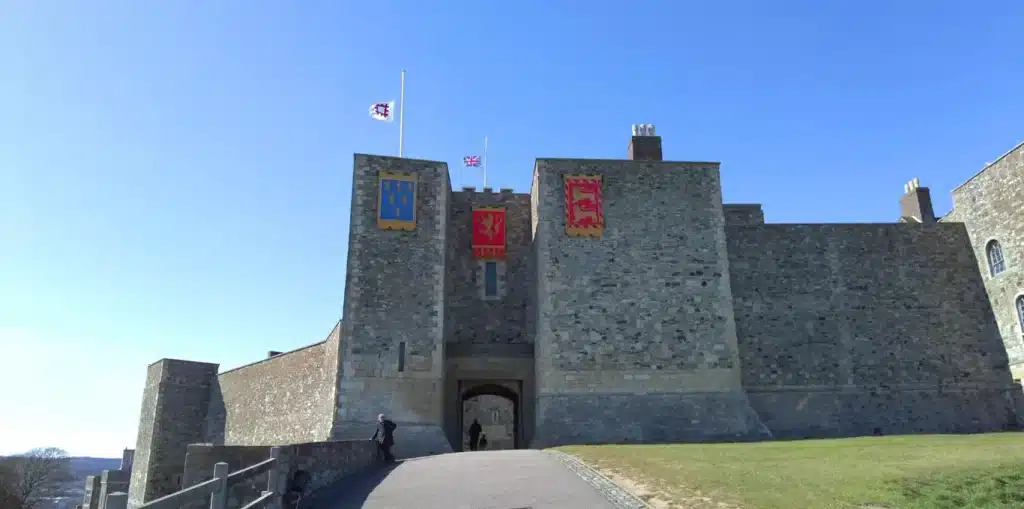
Over the centuries, Dover Castle evolved far beyond a royal fortress. Its position overlooking the English Channel made it one of the most strategically important military locations in all of Britain.
Back above ground, we made our way into the Great Tower, the massive medieval heart of Dover Castle. Inside, many of the rooms were recreated to show what life looked like during the era of King Henry II, giving visitors a glimpse into how royalty and soldiers once lived within fortress walls.
3. Discover Ancient History at Dover Museum & Bronze Age Boat Gallery
Located right in town, the Dover Museum offers a compact yet fascinating look into the region’s past, blending local archaeology with deep maritime heritage.
The standout attraction here is the Bronze Age Boat Gallery, which houses a remarkable ancient vessel dating back thousands of years. With interactive displays and curated historical artifacts, it’s an engaging spot to understand how the town evolved over millennia.
4. Relax at Dover Beach.
For a relaxed seaside escape close to the town center, head down to Dover Beach. Featuring pebbled shores, tranquil waters, and direct views of the iconic white cliffs, it’s a popular spot for a leisurely stroll along the promenade, a quiet picnic, or beachside sunbathing. Local eateries and seasonal events nearby make it easy to spend a relaxed afternoon by the water.
5. Stroll Through Kearsney Abbey Gardens
If you’re looking for greenery and peace, Kearsney Abbey Gardens offers a beautifully landscaped parkland experience.
The grounds feature tree-lined walking trails, ornamental ponds, historic architecture, and subtle historical ruins. It’s an ideal setting for an afternoon stroll, outdoor exercise, or a quiet family picnic surrounded by nature.
6. Visit Historic St. Mary’s Church
St. Mary the Virgin Church represents the main and most impressive church of the town. It is said that the Saxons established this church, and the Normans and Victorians continued to add some elements to it. The church was closed during the life of King Henry VIII, but reopened in 1544. In the 19th century, it was rebuilt and enlarged, giving it a new image. Some artisan towers were rebuilt using stone, giving them a modern, more fashionable look. Beyond its peaceful interiors and reflective churchyard, the church plays a vital role in the community and offers visitors a quiet space to appreciate Dover’s older architectural treasures.
7. Uncover Military History at Western Heights
For history buffs and photography enthusiasts, Dover Western Heights is a must-visit site.
Sprawling across the hills, this historic area features extensive Napoleonic fortifications, underground passages, ramparts, and secret tunnels. Exploring the defensive structures gives you a firsthand look at the city’s critical military significance throughout history, all paired with sweeping views over the town and harbor.
8. Experience Samphire Hoe Nature Reserve
Created entirely from the chalk excavated during the construction of the Channel Tunnel, Samphire Hoe is a unique coastal park tucked right beneath the cliffs.
It’s a fantastic spot for walking, cycling, and wildlife observation. With scenic paths, diverse plant life, and uninterrupted views of the English Channel, it offers a refreshing retreat into nature.
9. Step Back in Time at the Dover Transport Museum
Car enthusiasts and history lovers will appreciate the Dover Transport Museum. It houses a diverse collection of historic vehicles, including vintage cars, classic buses, and motorcycles.
The informative exhibits and preserved vehicles offer a fun, hands-on look at the evolution of British transport heritage. By the way, this is a paid museum. You have to pay some pounds to enter the museum.
10. Unwind at Shakespeare Beach
Rounding out the top spots is Shakespeare Beach, a scenic pebbled shore known for its calm waters and dramatic backdrop of the white cliffs.
Whether you want to take a walk along the coastline, watch the waves, or capture memorable photographs, it provides a welcoming, welcoming seaside atmosphere to cap off your trip.
11. Visit South Foreland Lighthouse
A historic Victorian lighthouse near St. Margaret’s Bay, offering beautiful coastal views and scenic walking routes. This even has the facility to climb to the top of the lighthouse and explore the great wide view from the top.
12. Roman Painted House
During the Roman invasion of Britain, Dover was one of the principal ports of the empire. A great amount of money was spent by the Romans to construct buildings. One of the finest in Dover was discovered in the 20th century and opened to the public as the Roman Painted House. The museum has on display an elaborate series of rooms, each bringing the Roman way of life to the modern visitor.
13. St. Paul’s Church
St. Paul’s Church is a Roman Catholic Church that dates back to 1868. It was damaged during the Second World War and subsequently restored several times. At the time, it required some new elements of restoration that added to the services. Today, it is a beautiful church that holds services and transmits God’s wishes. It attracts a person through its simplicity and peacefulness.